
The AI notebookthat learns with you
A canvas, a notebook, and an AI. Ready to help you learn.
Around 3000 BC, someone pressed Nile reeds into a sheet and wrote down a thought, and for the first time, an idea outlived its thinker. Every notebook, every whiteboard, every margin scribble since is the same technology: a surface that holds ideas still long enough to look at them. We kept the surface. We taught it to think back.
Easily convert your written notes into structured docs.
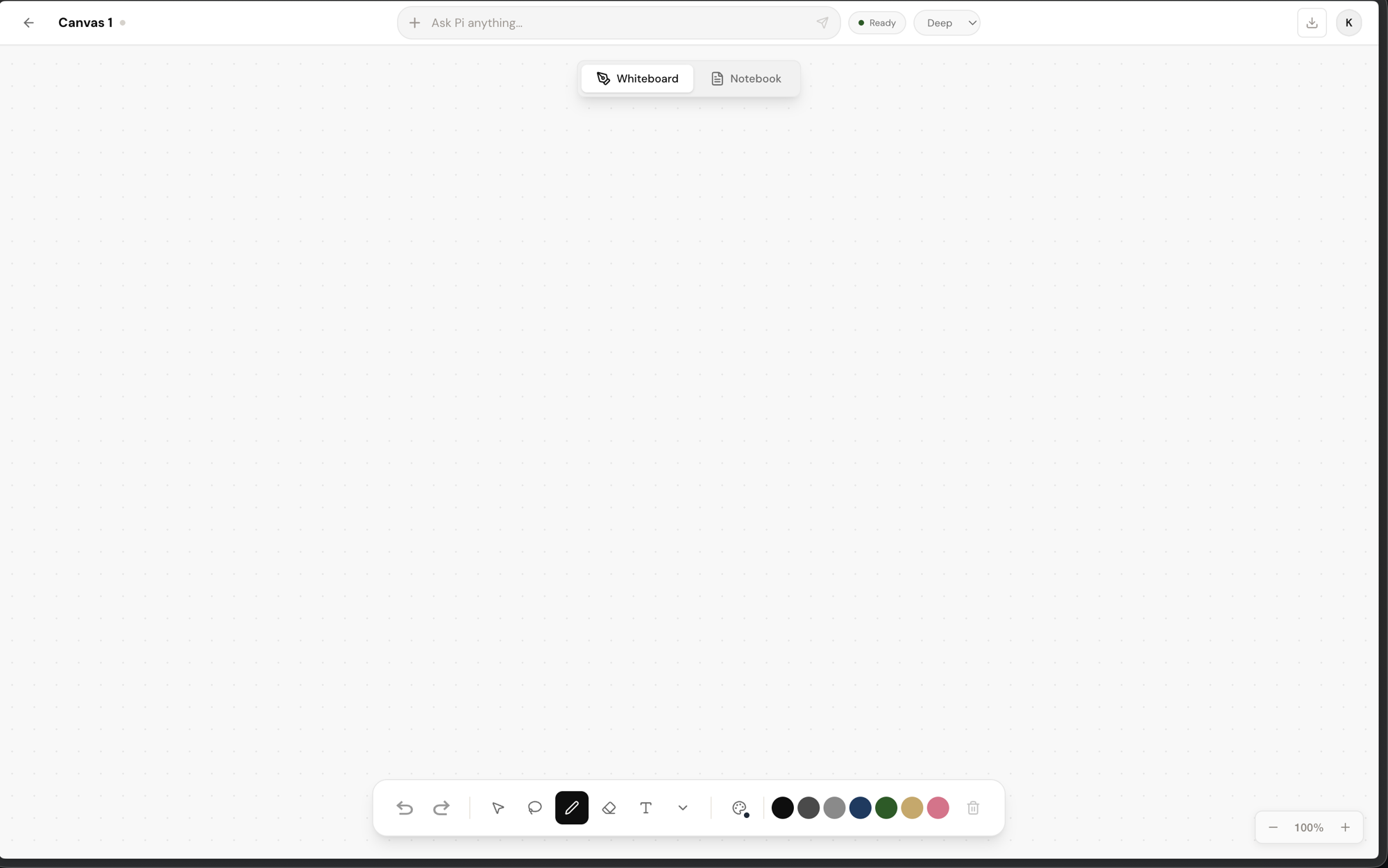
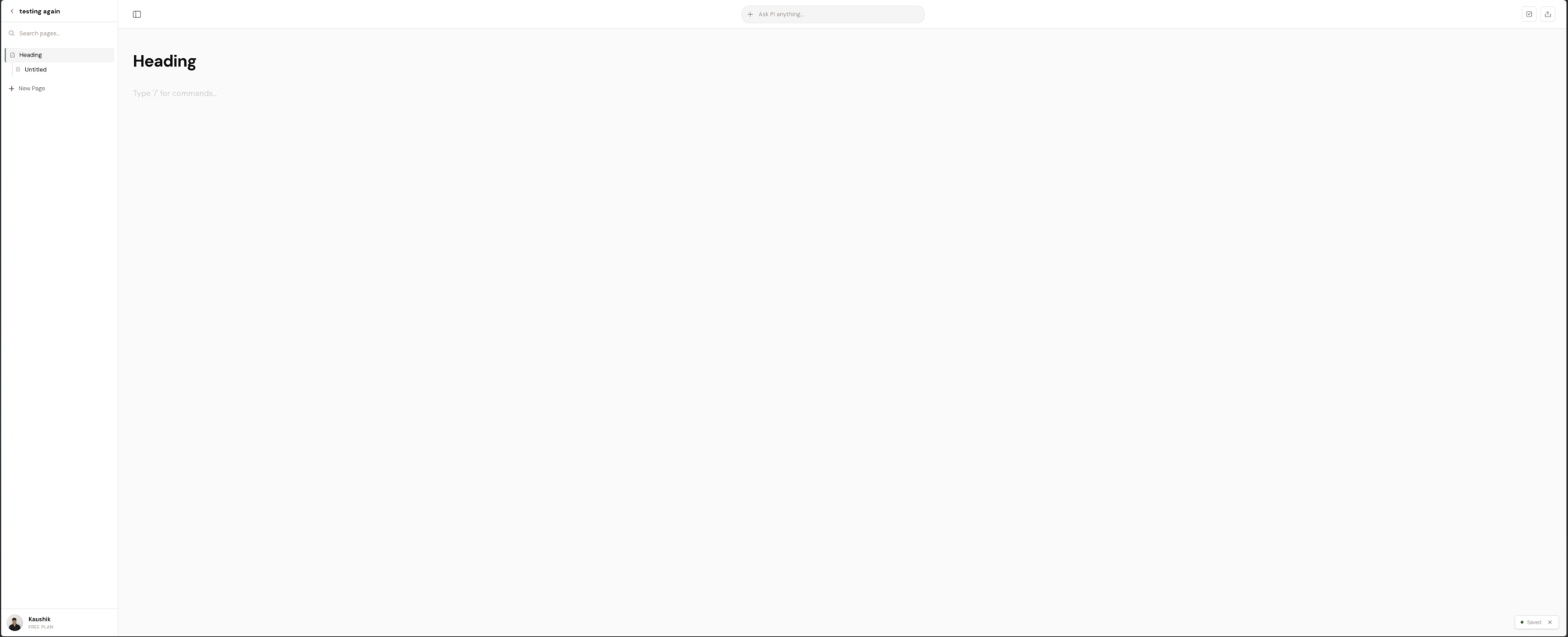
- Never study alone again.
- An infinite space for infinite ideas.
- Pi works right where you’re drawing. Ask it anything.
- Easily convert your notes into structured study guides.
- Make learning fun.
Meet Pi, your own mini professor.
Pi doesn’t just answer, it teaches. Ask Pi anything and watch how it goes about the problem right in front of you.
- Explains any concept step by step. Not just the answer.
- Draws diagrams and visual models right on the canvas.
- Available 24/7 so you never have to wait for a response.
- Always learning so it is up to date with the latest information.
- Built to teach and to help you learn.
Make me a model of how the nitrogen cycle works
05:27 PMFeatures
ExportExport a study guide
Turn any notebook page into a clean, condensed PDF.
From handwritten to typed
Written notes convert into fully typed, structured text.
Everywhere you are
Pick up right where you left off. Your notes stay synced across all devices.
Frequently asked questions
Most apps give you a chat window on top of a text editor, but Papyrus gives you a spatial canvas and a structured notebook with a thinking AI that lives in both.
No, they work together. You can embed a canvas inside your notebook and jump between the two with all your ideas synced in real-time.
Yes. The iPadOS version currently has Apple Pencil support, with desktop connectivity coming real soon.
You can use Papyrus as an iPadOS application, or as a desktop application, where you can access your notebooks and canvases across both.
All your canvases, notebooks, and everything Pi sees while working with you stays private to your account. Papyrus does not track user data.
Any page can be exported into a condensed PDF or as plain text.
Yes, Papyrus is free to get started, with optional paid plans for people who want deeper access to Pi.